Chiropractor vs Physiotherapist vs Exercise Physiologist: Which One Do You Actually Need?
You’ve had a stiff back or an unhappy knee for weeks. Nobody has told you which practitioner to book, so nothing has happened. This guide maps what each profession treats, so you can pick a door fast.
The real reason you’re unsure
The pain started three weeks ago. You’ve read four clinic websites and each one recommends a different profession. So you’ve booked nothing, which is the one decision guaranteed not to help.
That stall isn’t laziness. Chiropractor vs physiotherapist sounds like a comparison you should be able to settle in ten minutes, yet chiropractors, physiotherapists and exercise physiologists all advertise the same conditions. Most of it is musculoskeletal work: joints, muscles, tendons and the way they move.
The difference sits in training, scope and tools. Learn them and the choice takes about a minute.
What each one is actually trained to do
Chiropractors
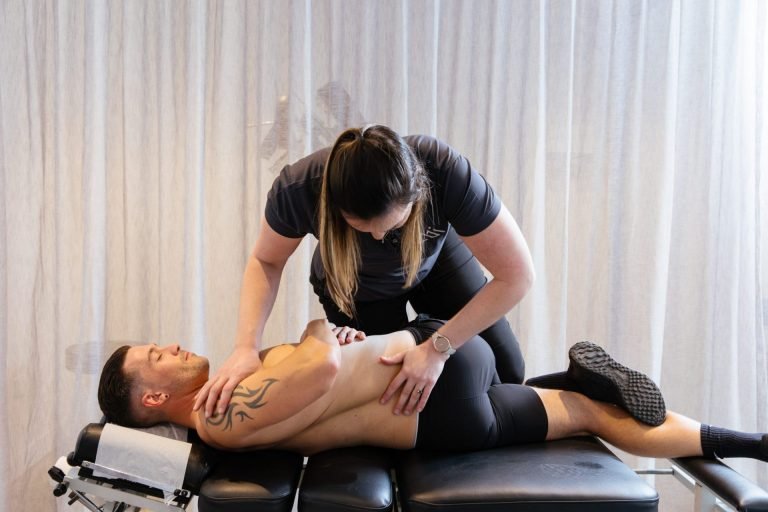
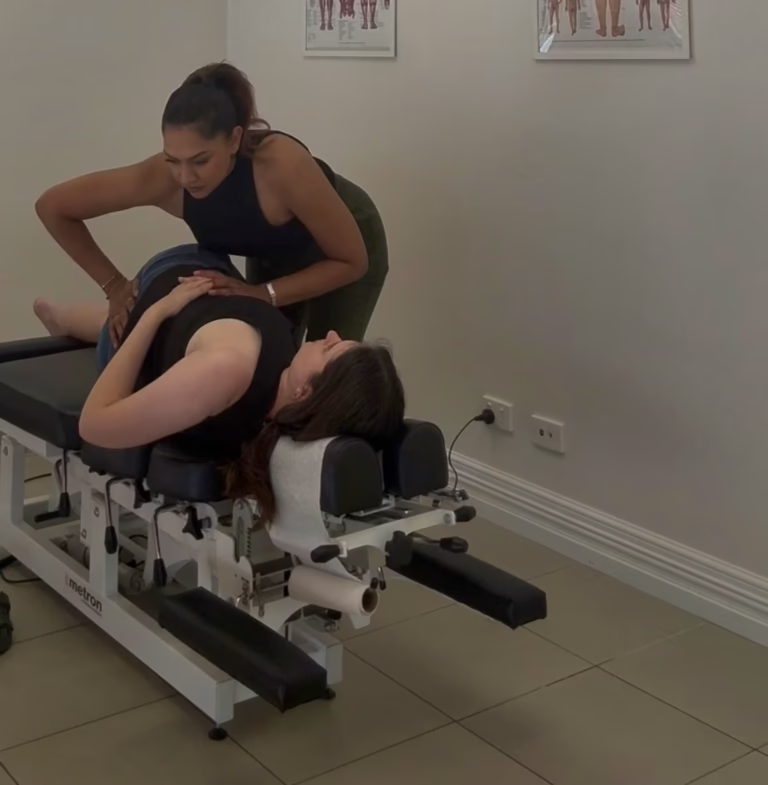
Chiropractic degrees in Australia run five years: a three-year bachelor, then a two-year Master of Clinical Chiropractic. Registration with the Chiropractic Board of Australia is mandatory, and chiropractors sit inside the same AHPRA scheme as every other registered health profession in Australia. Their core tools are manual therapy: spinal manipulation and mobilisation, soft tissue work, and posture advice alongside it. If you woke up unable to turn your head, or your low back locks every time you stand up from a chair, that’s chiropractic territory, and Healthdirect lists low back pain, neck pain and headaches as common reasons people book.
Physiotherapists
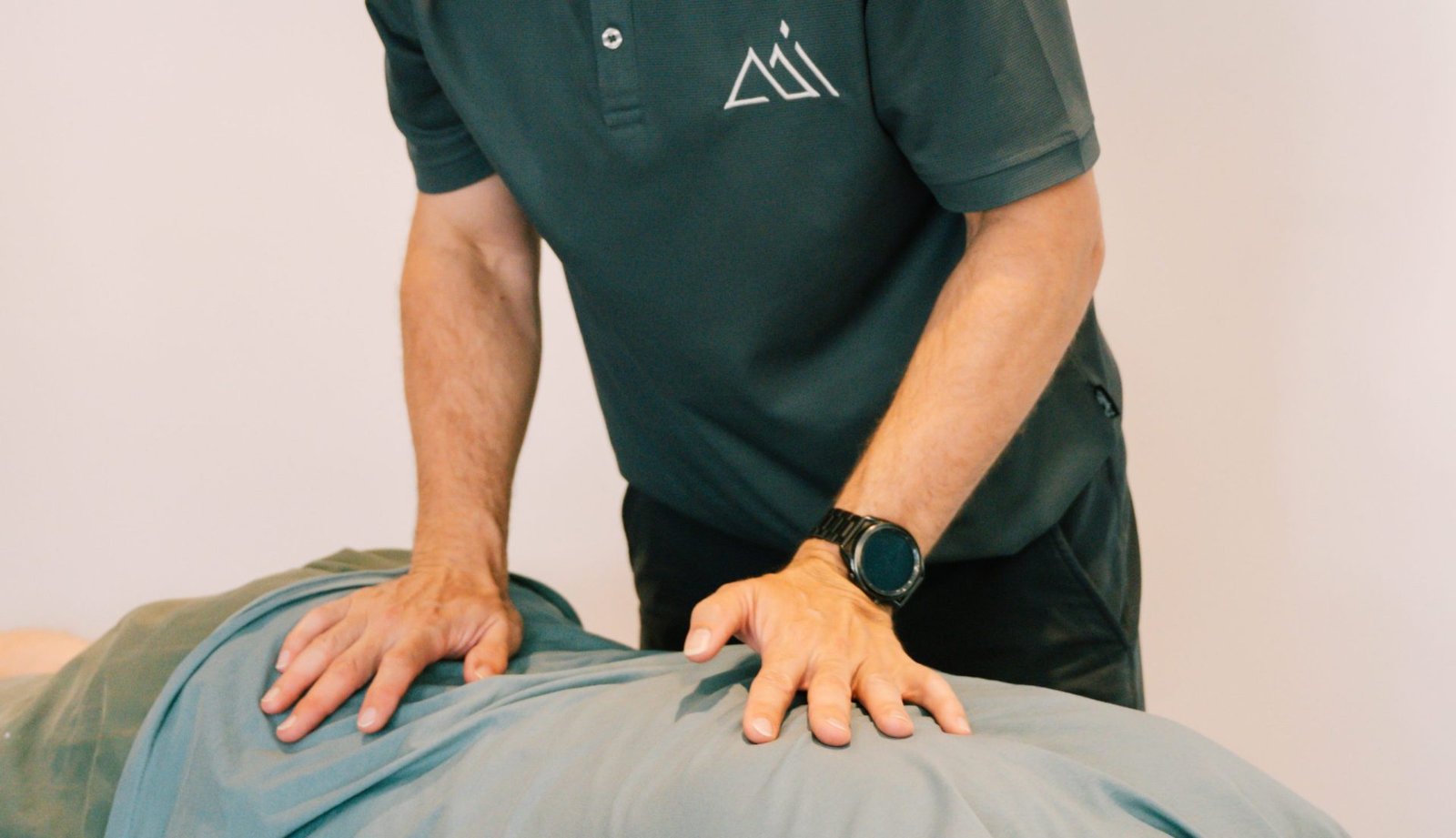
Physiotherapists complete a four-year bachelor degree or a two-year master’s entry program, and they’re AHPRA-registered too. Their scope reaches well past sore muscles. A typical session blends hands-on assessment, manual therapy, taping or dry needling, and a home program you’ll be asked about next visit. Physiotherapy suits acute injuries, post-surgical knees, torn hamstrings, and anything that’s changed the way you walk or sleep.
Exercise physiologists
Accredited exercise physiologists study for a minimum of four years and log 360 hours of supervised clinical placement before ESSA accredits them. Their treatment tool is exercise itself, prescribed with the precision a physio applies to early rehab, but built around diagnosed long-term conditions. Type 2 diabetes, osteoarthritis, chronic pain, cardiac and cancer recovery. They don’t perform manipulation or massage. If a surgeon has already cleared you and your real question is how to rebuild strength without flaring things up again, that’s the exercise physiologist’s job.
| Profession | Training | Best suited to | What treatment looks like |
|---|---|---|---|
| Chiropractor | Five years: bachelor plus Master of Clinical Chiropractic. | Mechanical neck and low back pain, restricted joints, morning stiffness. | Manual therapy, including spinal manipulation, plus exercise advice. Sessions run 20 to 30 minutes. |
| Physiotherapist | Four-year bachelor or two-year master’s entry. Registered with AHPRA. | Acute injury, post-operative and sporting rehabilitation. | Hands-on assessment, manual therapy, taping or dry needling, then a graded home program. Sessions run 30 to 45 minutes. |
| Exercise physiologist | Minimum four years of study plus 360 hours of clinical placement. Accredited through ESSA. | Long-term conditions where the diagnosis is settled and strength needs rebuilding. | Clinical exercise prescription in a gym, progressed over weeks. Sessions run 45 to 60 minutes. |
Match your problem to the right door: chiropractor vs physiotherapist vs exercise physiologist
Most presentations sort themselves once you name the problem out loud, and the chiropractor vs physiotherapist question usually answers itself.
- Bent down to pick up a suitcase and your back seized. Chiropractor, same week.
- Woke up with a neck that won’t turn past about 30 degrees. Chiropractor.
- Rolled an ankle on Saturday’s parkrun, now swollen and bruising. Physiotherapist.
- Six weeks after a knee replacement and you still can’t bend past 90 degrees. Physiotherapist.
- Pain shooting down one leg with pins and needles in the foot. Physiotherapist first, because a neurological assessment changes the plan.
- Eight months of back pain, already scanned, nothing structurally wrong. Exercise physiologist.
- Type 2 diabetes and no structured exercise history behind you. Exercise physiologist.
- Hamstrings that tear every football season. Physiotherapist to diagnose, exercise physiologist to rebuild.
Where the lines blur, and why that’s fine
Here’s the part nobody puts on a website. The professions overlap, and so does the evidence. The Low Back Pain Clinical Care Standard, published by the Australian Commission on Safety and Quality in Health Care, doesn’t nominate a winning profession at all. It recommends physical or psychological interventions matched to the individual, and it names physiotherapists and chiropractors among the clinicians who can deliver that early care.
What matters more than the letters after a name is whether the clinician assesses you properly, explains what’s driving the pain, and gives you something useful in between.
There’s a limit to that, and you should know it before you book. Sharp night pain that wakes you, unexplained weight loss, a recent fall over 65, or changes to bowel or bladder control are not clinic problems. Those need a GP or an emergency department first.
How we’d route you at PPI
At Peak Performance Institute in West Leederville, the hand-off happens in the corridor, not by letter. Dr Monique Olliver and the chiropractic team handle mechanical neck and low back pain, and they’ll say plainly when a case is better suited elsewhere. Mark Maddison, our physiotherapist, picks up acute injuries, post-operative rehabilitation, and anything needing a neurological screen. Carlos Bervenotti, our exercise physiologist, takes over once the diagnosis is settled, then rebuilds the strength side so the problem doesn’t return in six months. Our lower back pain page covers that assessment.
You don’t need to work out chiropractor vs physiotherapist before you call. That’s what the first ten minutes of an appointment is for.
What to bring to the first appointment
Turn up prepared and you’ll get more out of the session.
- A rough timeline of when it started and what you were doing.
- Any scans or specialist letters, plus the written reports.
- Your current medications and supplements.
- Shorts if the problem is a hip, knee or ankle.
- One specific goal, like the 5km run or sleeping through the night.
Book the earlier slot if you can. Someone in real pain moves differently by four in the afternoon.
References
- Healthdirect, Chiropractors and chiropractic treatment
- Exercise & Sports Science Australia, Accredited Exercise Physiologist accreditation
- Australian Commission on Safety and Quality in Health Care, Low Back Pain Clinical Care Standard
If you’re still weighing up chiropractor vs physiotherapist and getting nowhere, Peak Performance Institute at 144 Cambridge St, West Leederville takes bookings on (08) 9381 1265. Call and describe the problem. We’ll tell you who to see. Or book online.