
Why a Team Beats One Practitioner: PPI’s Multidisciplinary Approach to Back Pain
You’ve tried the physio. Maybe you’ve seen a chiro. You got some relief — but it didn’t stick. That’s not because those practitioners weren’t good at what they do. It’s because back pain rarely has just one cause, so treating it through one lens will always leave gaps. At Peak Performance Institute, our multidisciplinary back pain treatment West Leederville brings chiropractic, physiotherapy, and exercise physiology together under one roof — so every angle gets covered at the same time.
Back pain is stubborn. It can be muscular, joint-related, nerve-driven, or — more often than you’d think — a messy combination of all three. The beauty of a team approach is that you don’t have to guess which piece is missing. Our practitioners talk to each other, compare notes, and build a single plan that actually addresses the whole picture. The result? Faster progress, fewer appointments, and relief that lasts.
Why Seeing One Practitioner Alone Often Falls Short
Think about the last time you had back pain. You probably started with one type of practitioner — whoever you know, whoever’s closest. And if you’re like most people, you got about 60 to 70 percent better before hitting a wall. The remaining pain was either shrugged off or became something you “just lived with.”
Here’s the thing nobody tells you: that stubborn 30 percent is usually the part your individual practitioner isn’t trained to treat. A physio might get your muscles firing and your movement patterns improving, but if your sacroiliac joint keeps locking up, progress stalls. A chiro might free up that joint beautifully, but without the right rehab exercises to keep it stable, you’re back in the same chair two weeks later. And an exercise physiologist can build you a rock-solid strengthening program, but if you’re too locked up or inflamed to do the work properly, you never really get off the starting line.
Research backs this up. A Cochrane systematic review published in the BMJ found that multidisciplinary biopsychosocial rehabilitation was significantly more effective than usual care and physical treatments alone for reducing pain and disability in people with chronic low back pain (Kamper et al., 2015). More recently, a 2023 meta-analysis concluded that biopsychosocial interventions “produce better outcomes than active physical treatment alone” (Ho et al., 2023).
How the PPI Team Works Together
At PPI, “multidisciplinary” isn’t a buzzword — it’s how our clinic actually operates. Our chiropractors, physiotherapists, and exercise physiologists share the same space, the same systems, and the same goal: getting you out of pain and keeping you there.
Chiropractic: Unlocking the Spine
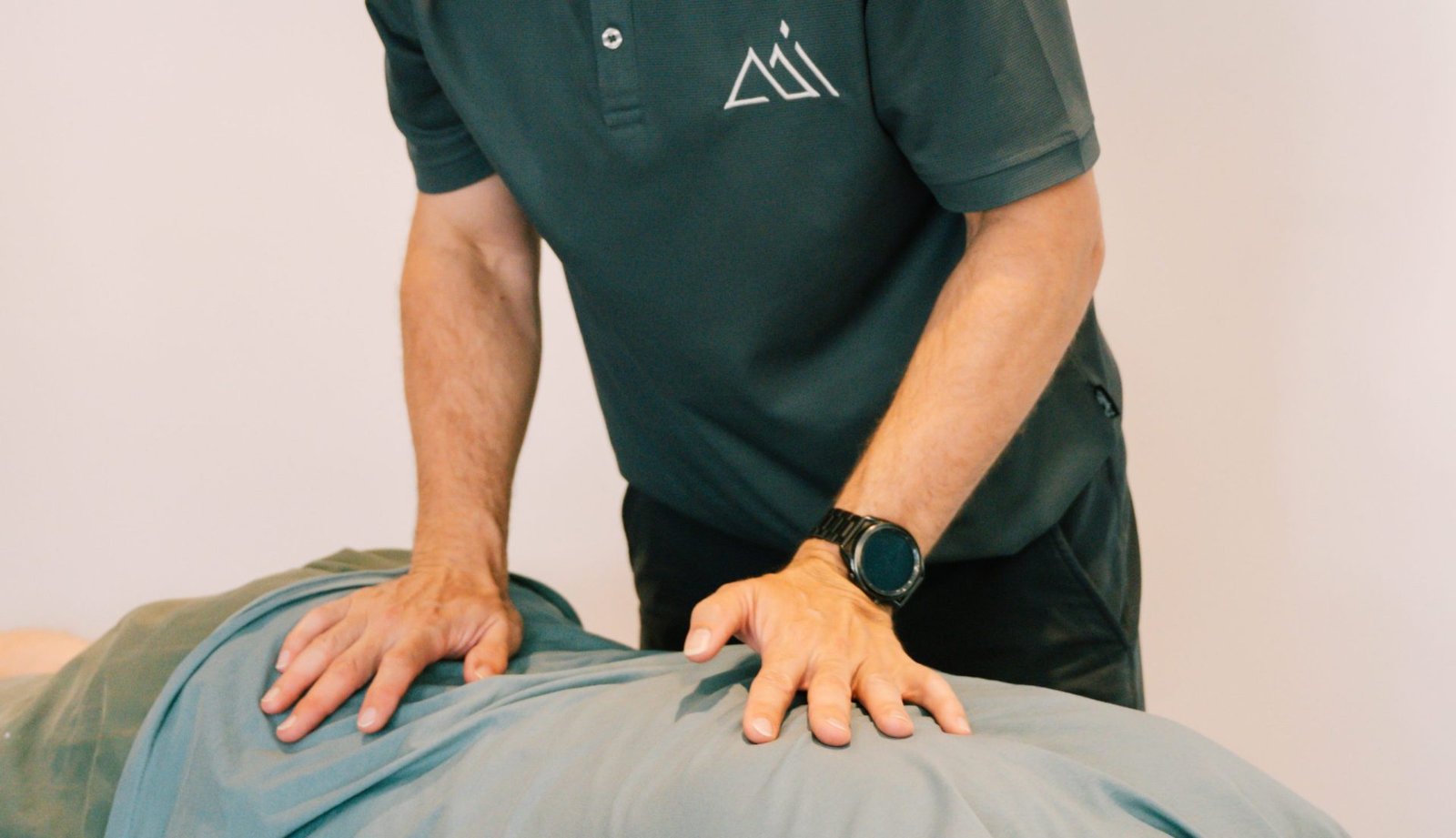
When your spine isn’t moving properly, everything else suffers. Joint restrictions in the lumbar spine or pelvis throw off your movement mechanics, irritate surrounding nerves, and force muscles into protective spasms that create their own secondary pain. PPI’s chiropractors focus on identifying and restoring those restricted segments — not just with adjustments, but with a broader toolkit including soft tissue work, dry needling, and movement assessment.
Physiotherapy: Restoring Movement and Control
Once the joints are moving better, the question becomes: can your body control that new range of motion? PPI’s physiotherapists assess your movement patterns, identify which muscles are underactive or overactive, and use hands-on treatment plus targeted exercises to retrain your system. Lower back pain often comes with deep-core inhibition — your transversus abdominis and multifidus essentially go offline after an injury. A physio knows how to switch them back on.
Exercise Physiology: Building for the Long Haul
This is where many back pain treatments stop — and where PPI’s approach goes further. Once pain eases and movement improves, an exercise physiologist designs a progressive loading program tailored to your body, your goals, and your demands — whether that’s picking up your toddler without wincing, returning to competitive sport, or simply sitting at a desk for eight hours without seizing up. The goal isn’t just pain relief — it’s building a back that’s genuinely resilient.
The Realistic Timeline: What Progress Actually Looks Like
- Weeks 1–2: Initial assessment across disciplines. Pain typically starts to ease as joint restrictions are addressed and acute muscle tension settles.
- Weeks 3–6: Movement retraining kicks in properly. Your body starts learning new patterns. Pain may fluctuate — that’s normal as tissues adapt.
- Weeks 6–12: Strength and load tolerance build. The focus shifts from “getting out of pain” to “staying out of pain.”
- 3–6 months: Maintenance and performance. Some people graduate to independent management with occasional check-ins.
Why “Under One Roof” Matters
When your practitioners can have a five-minute corridor conversation about your case — rather than exchanging clinic letters that take a week — your treatment plan evolves in real time. PPI also integrates complementary therapies including infrared sauna, compression therapy, and our BulletProof sports rehab program.
Take the First Step
If you’ve been cycling through practitioners without lasting results, you’re not alone. Call us on (08) 9381 1265 or visit us at ppiperth.com.au. Let’s get your back working the way it should — with a team that actually works together.
References:
Kamper, S.J., Apeldoorn, A.T., Chiarotto, A., et al. (2015). Multidisciplinary biopsychosocial rehabilitation for chronic low back pain: Cochrane systematic review and meta-analysis. BMJ, 350, h444.
Ho, E., Ferreira, M., Chen, L., et al. (2023). The effectiveness of low-dosed outpatient biopsychosocial interventions compared to active physical interventions on pain and disability in adults with nonspecific chronic low back pain. Pain Medicine, 24(3), 269–281.
Flor, H., Fydrich, T., & Turk, D.C. (1992). Efficacy of multidisciplinary pain treatment centers: a meta-analytic review. Pain, 49(2), 221–230.

