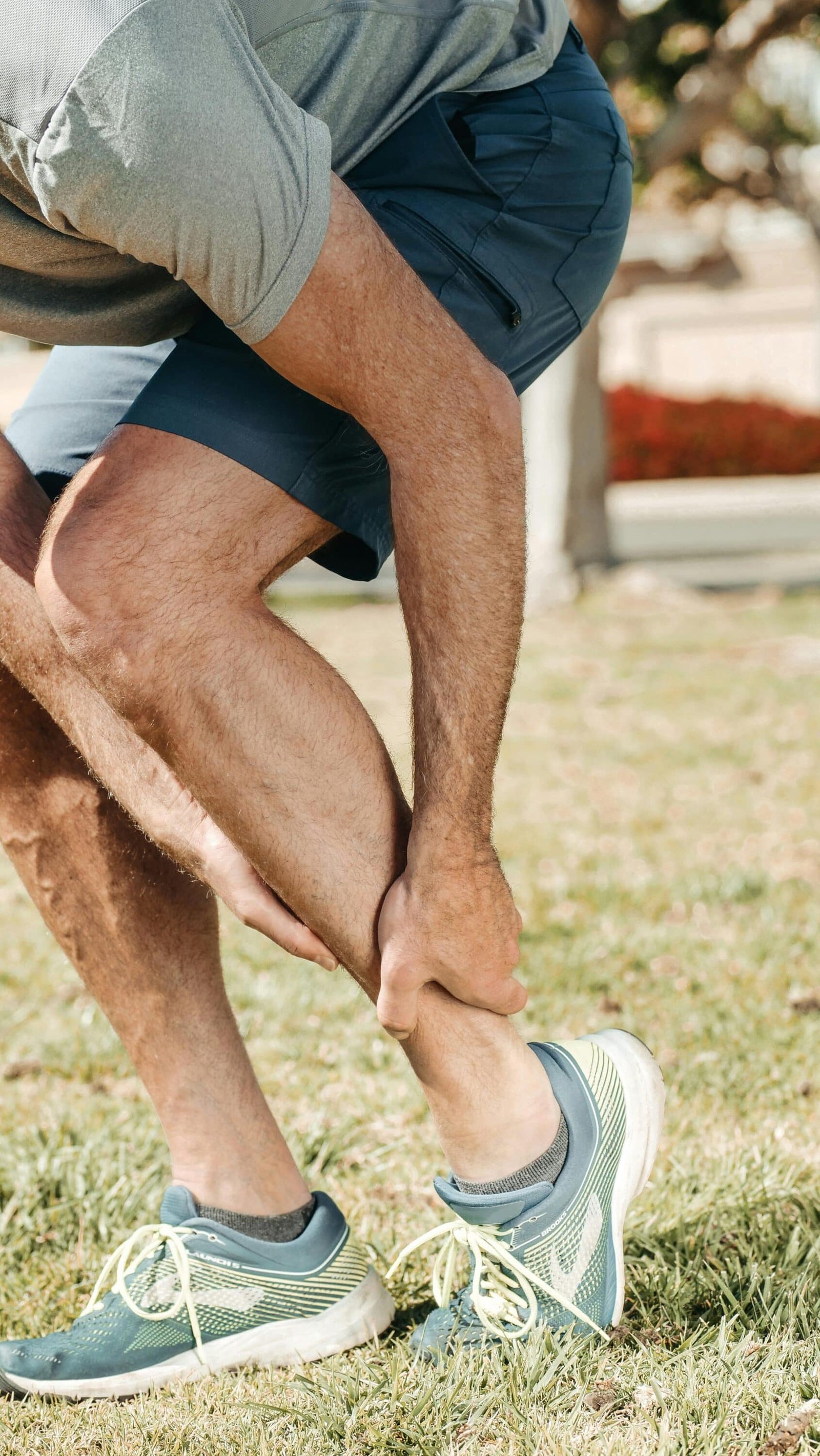
If you run, chances are you’ve felt a niggle that made you wonder — is this something, or nothing? You’re not alone. Research shows that around 37% of runners experience a lower limb injury each year, with the knee, lower leg, and ankle-foot accounting for the highest proportion of these issues (Kluitenberg et al., 2015; Francis et al., 2019). Whether you’re a weekend parkrunner or logging 80 km weeks for your next marathon, running injuries are frustrating, demoralising, and — if left unchecked — can sideline you for months. The good news? Most are preventable and treatable with the right approach.
Why Runners Get Injured
Running is a high-impact, repetitive activity. Every stride sends 2–3 times your body weight through your lower limbs. Over time, if your biomechanics, training load, or recovery aren’t dialled in, something’s gotta give. Running injuries are overwhelmingly overuse injuries — they build up gradually, not from one dramatic fall or twist.
Common culprits include:
- Doing too much, too soon (the classic training error)
- Poor foot mechanics (excessive pronation or supination)
- Weak glutes or poor hip control
- Inadequate footwear or gear
- Insufficient recovery between sessions
The Most Common Lower Limb Running Injuries (And What to Do About Them)
Shin Splints (Medial Tibial Stress Syndrome)
That aching, throbbing pain along the inside of your shin is the dreaded shin splint. It’s incredibly common, particularly in new runners or anyone ramping up mileage too quickly. Some studies report MTSS prevalence as high as 70% in certain running populations (PMC, 2025). Early intervention — rest, ice, and a biomechanical assessment — is key before it progresses to a stress fracture.
Runner’s Knee (Patellofemoral Pain Syndrome)
Pain around or behind the kneecap, especially when going downhill or sitting for long periods? That’s runner’s knee — the single most common running injury, accounting for roughly 24–28% of all running-related lower limb injuries (Kluitenberg et al., 2015). It’s often linked to weak glutes, tight quads, and poor tracking of the kneecap.
ITB Syndrome (Iliotibial Band Syndrome)
Sharp pain on the outside of the knee that strikes around the same distance every run? That’s your ITB. It affects about 12% of runners with injuries and is more common in females and those running longer distances (Frontiers in Sports and Active Living, 2024). It’s notoriously stubborn — but responds beautifully to a combined podiatry and physio approach.
Achilles Tendinopathy
Stiffness and pain in the Achilles tendon, especially first thing in the morning or at the start of a run. This one thrives on neglect — the earlier you address it, the better. Load management, eccentric exercise, and footwear assessment are the gold standard.
Plantar Fasciopathy
That stabbing heel pain when you take your first steps out of bed. Plantar fasciopathy is a common culprit, and while it can be persistent, the right combination of stretching, footwear, orthotics, and shockwave therapy makes a huge difference.
Stress Fractures
The one no runner wants to hear about. A stress fracture is a small crack in a bone — often in the tibia, metatarsals, or navicular — caused by repetitive loading. Unlike muscle injuries, stress fractures demand absolute rest and a carefully managed return to running. Biomechanical assessment (like our Zebris gait analysis) is critical to prevent recurrence.
The PPI Difference: A Team Approach That Actually Works
Here’s the thing about running injuries: they rarely have a single cause. Your foot mechanics might be loading your knee. Your hip weakness might be straining your ITB. Your training schedule might be outpacing your body’s ability to adapt. That’s why a team-based approach is so much more effective than seeing one practitioner in isolation.
At Peak Performance Institute in West Leederville, we bring together sports podiatry, physiotherapy, and exercise physiology under one roof — so you’re not bouncing between clinics with a fragmented story.
Podiatry — Start at the Ground Up
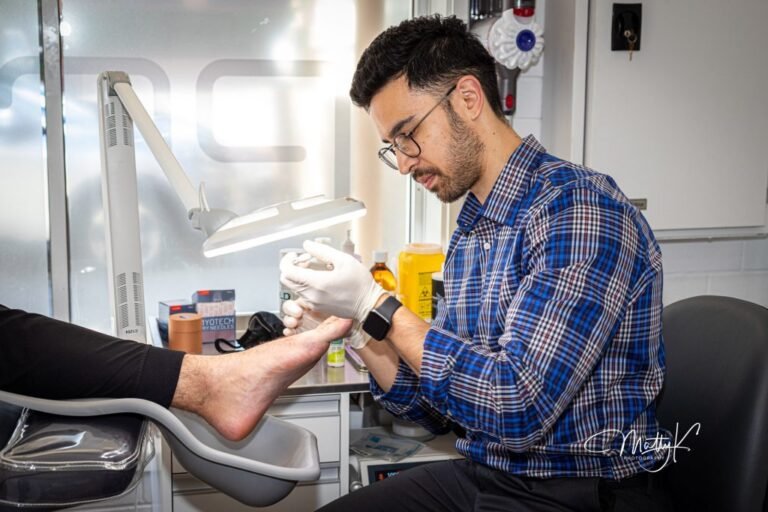
Your feet are the foundation of every stride. Led by Dr Aaron Gregory, our sports podiatrist (a graduate of UWA and the University of Melbourne with a Master of Sports Medicine who has worked with elite WA sporting teams), our podiatry team uses advanced tools to assess what’s happening from the ground up. That includes our Zebris 3D Gait Analysis system — a high-tech treadmill with over 7,000 pressure sensors that captures exactly how your feet land, roll, and push off at running speed. It’s like having x-ray vision for your running form.
Physiotherapy — Fix the Moves That Matter
Once we understand what your feet are doing, our physiotherapists look at everything upstream — your hips, glutes, core, and pelvic control. Weakness or tightness anywhere in this chain can cause downstream problems. Your physio works on manual therapy, strength retraining, and movement re-education to address the root cause.
Exercise Physiology — Build Back Stronger
Rehab isn’t just about getting pain-free — it’s about getting strong enough to handle your running load without breaking down again. Our exercise physiologists design progressive return-to-running programs tailored to your goals, whether that’s a 5 km fun run or an ultramarathon.
Why Early Intervention Matters
A Cochrane review and multiple clinical guidelines confirm that early, multi-modal care for overuse running injuries leads to better outcomes and faster return to sport. Waiting until you can barely walk is not the play. If you’ve been nursing a niggle for more than two weeks, that’s your body waving a red flag.
Ready to Run Pain-Free?
Whether you’re dealing with shin splints, runner’s knee, or a mystery pain that won’t quit, we’re here to help. At Peak Performance Institute, we don’t just treat the symptom — we find the cause and get you running stronger than before.
Call us today on (08) 9381 1265 to book an assessment with our podiatry or physio team. Located at 144 Cambridge Street, West Leederville — just minutes from Subiaco, Wembley, Floreat, and the Perth CBD.