If you’ve noticed a bony bump forming at the base of your big toe, you’re not alone — and you’re probably dealing with a bunion. Also known as hallux valgus, bunions are one of the most common foot conditions podiatrists see, yet they’re also one of the most misunderstood. The good news? There’s plenty you can do before surgery enters the conversation, and here at Peak Performance Institute in West Leederville, we help people across Perth manage bunions with a warm, personalised, and evidence-based approach.
In simple terms, a bunion is a structural deformity of the big toe joint. Over time, the big toe starts leaning toward the second toe, and the joint at the base of the big toe sticks out. That bump? It’s not new bone growing — it’s the head of your first metatarsal bone becoming more prominent as the toe shifts out of alignment. And for many people, that bump becomes painful, swollen, and tender, especially in closed shoes (1).
So, What Actually Causes Bunions?
It’s a great question, and the answer is more complex than “wearing tight shoes.” While footwear definitely plays a role, the real picture is multifactorial. Researchers now understand that bunions develop due to a combination of genetics, biomechanics, and environmental factors (2).
If your mum or grandmother had bunions, there’s a higher chance you might develop them too. Certain foot shapes — particularly flat feet or excessively flexible feet — create a mechanical environment where the big toe is more likely to drift. Connective tissue disorders and inflammatory conditions like rheumatoid arthritis can also increase your risk.
That said, footwear is still an important piece of the puzzle. Narrow, pointed shoes and high heels squeeze the toes into an unnatural position, which can accelerate or worsen a bunion that’s already starting to form. It’s not that shoes cause bunions on their own — but they can certainly make a bad situation worse.
The Stages of a Bunion: It’s a Gradual Process
Bunions don’t appear overnight. They develop slowly over months or even years, progressing through distinct stages. Understanding where you’re at can help you make smarter decisions about treatment.
Stage 1 — Mild
At this point, the big toe has started to shift very slightly. You might notice a small bump that’s barely visible, and perhaps some redness or irritation after a long day in tight shoes. There’s likely no pain at rest. This is the ideal time to seek advice, because the right conservative care can slow or even halt progression.
Stage 2 — Moderate
The bump is now clearly visible. Your big toe is sitting at a more noticeable angle toward the second toe, and you might be feeling pain regularly — especially during walking or standing for long periods. You may also start to develop calluses or corns where the toes rub together. Many people seek podiatry care at this stage.
Stage 3 — Severe
The deformity is significant. Your big toe may be overlapping or sitting underneath the second toe, and the bump is large and often painful even at rest. The joint may feel stiff, and you may be struggling to find comfortable shoes at all. At this point, daily activities like walking, exercising, or even standing can be affected.
Conservative Management: What You Can Do (No Scalpel Required)
Here’s the thing most people don’t realise: in the vast majority of cases, bunions can be managed very effectively without surgery. The goal of conservative treatment isn’t to “straighten” the toe — it’s to reduce pain, improve function, and stop the deformity from getting worse.
Footwear Changes
Switching to shoes with a wide toe box is one of the simplest and most effective changes you can make. Your toes need room to sit in their natural position, not be crammed together. Look for shoes that are wide enough at the front — often labelled as “wide fit” or “extra depth.”
Orthotic Therapy
Custom foot orthotics are one of the most powerful tools we have in managing bunions. They work by correcting the underlying biomechanical issues — like over-pronation — that contribute to bunion progression. At PPI, we use advanced gait analysis and 3D scanning to create orthotics that support your feet exactly the way they need (3). Off-the-shelf orthotics can help in mild cases, but custom devices offer far better results for moderate deformities.
Padding and Splinting
Bunion pads, toe spacers, and night splints can provide symptomatic relief by reducing pressure on the bunion and holding the toe in a more aligned position while you sleep. These won’t reverse the deformity, but they can make a real difference to comfort levels.
Strengthening and Stretching
Specific exercises that target the muscles around the big toe and arch can help improve function and reduce strain on the joint. Your podiatrist can prescribe a tailored exercise program that fits your lifestyle.
When Is Surgery Actually Needed?
Surgery is typically reserved for cases where conservative management has been exhausted and the bunion is still causing significant pain or interfering with daily life. If you’re unable to walk comfortably, can’t find any shoes that fit, or the bunion is causing secondary problems like hammertoes or metatarsalgia, it may be time to discuss surgical options.
Importantly, surgery isn’t a “one-size-fits-all” procedure — there are over 140 different surgical techniques, and the right one depends on your unique anatomy, activity level, and the severity of your bunion. Your podiatrist can help you understand what’s involved, what recovery looks like, and whether it’s the right path for you.
Meet Dr Aaron Gregory — Your West Leederville Podiatrist
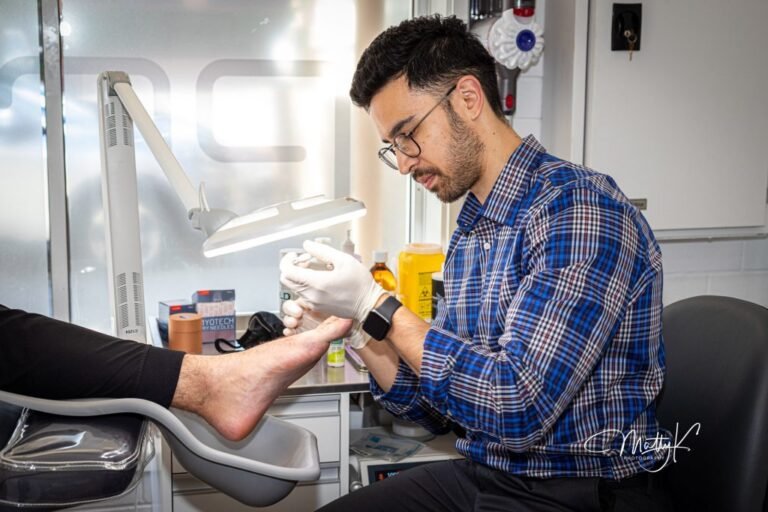
At the heart of our podiatry service at Peak Performance Institute is Dr Aaron Gregory. Aaron is a graduate of the University of Western Australia (Bachelor of Science in Podiatric Medicine, 2013) and holds a Master of Sports Medicine from the University of Melbourne. He’s worked closely with elite sporting teams including Swan Districts Football Club and Perry Lakes Basketball, and brings a deep understanding of foot biomechanics to every consultation.
Whether your bunion is just starting to develop or you’ve been living with pain for years, Aaron will take the time to understand your story, assess your feet thoroughly, and build a treatment plan that’s tailored to you — not a template.
Ready to Take the Next Step?
You don’t need to put up with bunion pain. Whether you’re in West Leederville, Subiaco, Wembley, Floreat, or anywhere around Perth, the team at Peak Performance Institute is here to help you move better, feel better, and stay active.
Call us today on (08) 9381 1265 to book an appointment with Dr Aaron Gregory.