
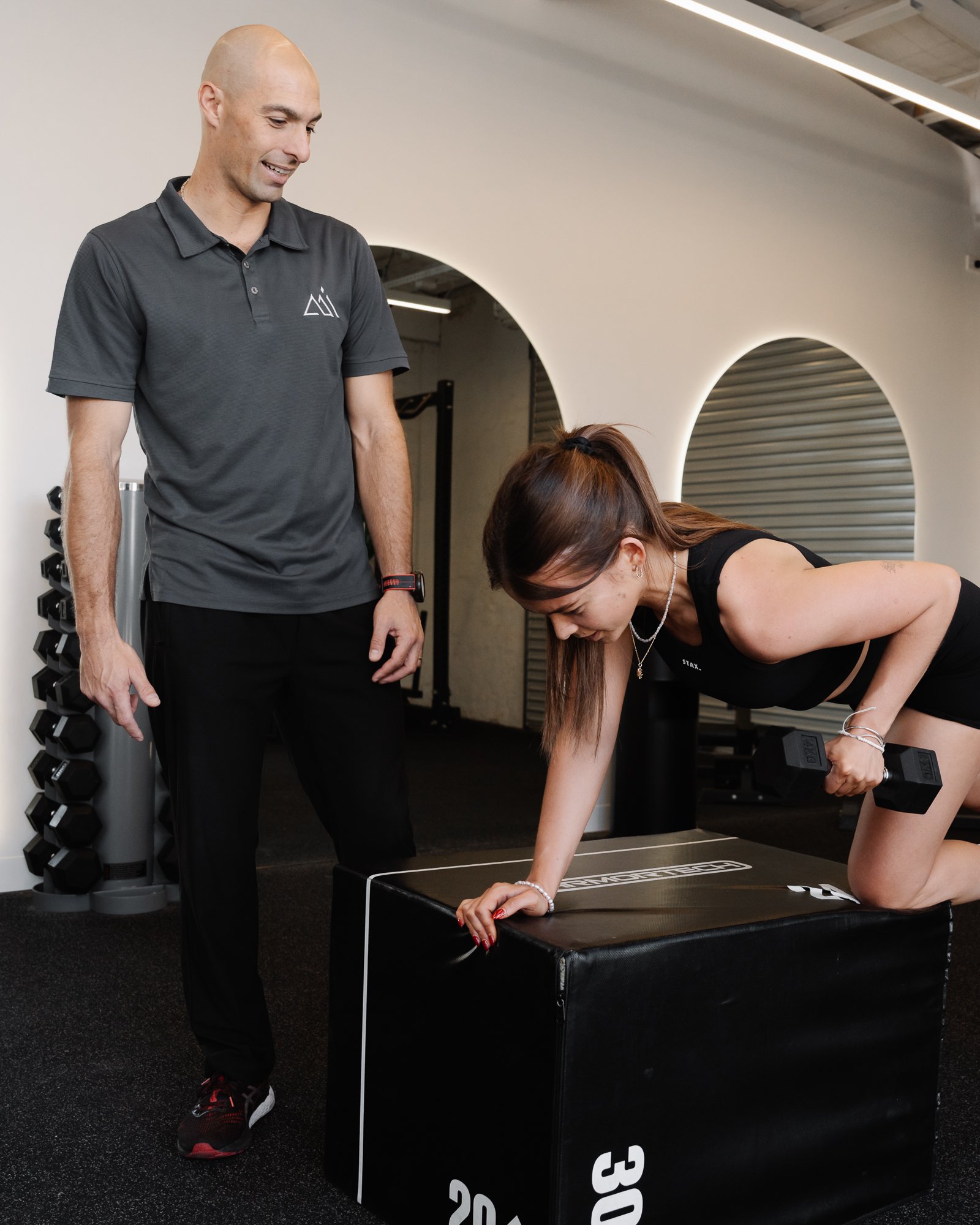
Exercise Physiology for Type 2 Diabetes: Managing Blood Sugar Through Movement
Exercise physiology for type 2 diabetes works on a mechanism, not a mood: contracting muscle pulls glucose out of your blood through a transporter called GLUT4, largely without insulin. Here’s what that means for training, HbA1c, and a realistic week at Peak Performance Institute, West Leederville.
How muscle pulls glucose out of your blood
Skeletal muscle is the body’s largest consumer of glucose. After a meal, glucose leaves your bloodstream and enters muscle cells, where it’s stored or burned for fuel. The doorway is a protein called GLUT4.
Most of the time GLUT4 sits inside the cell, parked in storage vesicles. Two things move it to the surface membrane. Insulin is one, muscle contraction the other.
The contraction trigger is the useful one. Insulin signalling is blunted in insulin-resistant muscle, so the same message recruits less GLUT4. Contraction doesn’t use that pathway.
In a study published in Diabetes, five people with type 2 diabetes cycled for 45 to 60 minutes at 60-70% of their maximal oxygen uptake. GLUT4 at the cell membrane rose by about 74% above resting values in the diabetes group, against 71% in controls (Kennedy et al., 1999). Insulin-stimulated GLUT4 movement was impaired in those same muscles. Contraction-stimulated movement wasn’t.
Training adds a second layer: more GLUT4 protein in muscle, and a higher ceiling for glucose clearance.
The two kinds of training that matter
Two modes carry the load here, and they do different jobs. Both matter.
Aerobic exercise (walking, cycling, swimming, the rower) clears glucose while you’re doing it. Muscles contract repeatedly, GLUT4 keeps cycling to the surface, and blood glucose falls. Diabetes Australia sets the target at 150 to 300 minutes a week.
Resistance training builds the sink. Every kilogram of muscle you add is tissue capable of storing glucose, and trained muscle carries more GLUT4 protein. Diabetes Australia recommends strengthening on at least two days each week.
Why bother with the heavier work if walking already lowers glucose? Because the aerobic effect fades within a day, while muscle mass keeps clearing glucose between sessions.
What the evidence actually says about HbA1c
HbA1c reflects your average blood glucose over about three months.
The evidence is modest and worth having. Diabetes Australia reports HbA1c falling by about 0.7 of a percentage point, even in people who didn’t lose weight (Diabetes Australia). Aerobic, resistance and combined programs all lowered HbA1c, and the combination of the two beat either one used on its own in the trial groups.
Seven-tenths of a point isn’t dramatic. It sits near the territory of a single glucose-lowering medication, with better blood pressure and sleep attached. Anyone promising remission from a walking program is overselling it. Exercise doesn’t replace medication unless your doctor says so.
A realistic week
Shorter bouts count. Ten or 15 minutes at a time still adds up.
A week we’d write for most people with type 2 diabetes: two or three resistance sessions, 150 minutes of walking or cycling, and a short walk after the biggest meal.
That’s the cheapest win available. Walk for 10 to 15 minutes after your largest meal, usually dinner, and you’re moving when your glucose curve peaks. Contracting muscle pulls glucose out of circulation while the meal digests. Same mechanism as a gym session, smaller and better timed.
| Day | What you do | Why it matters |
|---|---|---|
| Monday | Resistance session, 40 minutes: squat, press, row | Large muscle groups recruited, so more GLUT4 at the surface |
| Tuesday | 30-minute walk, brisk enough to be lightly puffing | Glucose cleared during and after the session |
| Wednesday | Resistance session, 40 minutes | Second strengthening day, meeting the two-day minimum |
| Thursday | 30-minute walk or a clinical Pilates class | Load without heavy weights; Pilates adds balance and control |
| Friday | Resistance session, 30 to 45 minutes | A third session if recovery allows, two if it doesn’t |
| Saturday | 45-minute walk or cycle, then 10 minutes after dinner | Longest aerobic block of the week, plus the post-meal walk |
| Sunday | Rest, or a 20-minute easy walk | Glucose stays lower on rest days with a little movement |
Two resistance sessions a week is a legitimate start, and we build to three. If a knee, ankle or foot makes walking painful, cycling, swimming and the rower carry the aerobic load while our physiotherapy and podiatry teams sort the joint out.
We use clinical Pilates as a bridge for people who need control and balance work before loading a barbell.
Safety first if you are on insulin or gliclazide
Insulin and gliclazide lower blood glucose whether or not you’re exercising, which is the difference that matters. Metformin and most newer agents don’t cause hypoglycaemia alone. Insulin does, and so do the sulfonylureas, the family gliclazide belongs to.
Add training and the risk climbs during the session and for hours afterwards. Know the signs: shaking, sweating, sudden hunger, a racing heart, dizziness. Treat with 15 grams of fast carbohydrate (jelly beans, glucose tablets, juice), wait 15 minutes, then recheck.
These numbers are worth knowing by heart. Under 4 mmol/L, treat the low and postpone exercise. Between 4 and 5, eat a small carbohydrate snack first. Between 5 and 10, train. Above 15 mmol/L, postpone anything strenuous. Running over 10 consistently, keep sessions gentle and get the readings reviewed.
Check your glucose before, during and after sessions, every 20 to 30 minutes when intensity or duration is new, then again later that day and overnight.
Get medical clearance first if you have heart, kidney or eye complications, nerve damage, foot problems, uncontrolled blood pressure, or a long stretch of inactivity behind you. If you take insulin, ask your diabetes team about dose adjustments on training days rather than changing them yourself.
What we measure: exercise physiology for type 2 diabetes over 12 weeks
Numbers keep a program honest. We take a baseline and repeat it at 12 weeks.
Baseline covers an HbA1c from your GP, glucose meter readings, waist circumference, blood pressure, resting heart rate, a six-minute walk test, and grip strength.
Then we track what you control: sessions completed, weights lifted, walking minutes, glucose before and after training. At six weeks we adjust the program, not the goal.
Our exercise physiology service sits inside a multidisciplinary clinic. A sore shoulder or a numb foot gets managed alongside training instead of pausing it.
To have exercise physiology for type 2 diabetes built around your own readings, book with our exercise physiologist at Peak Performance Institute, 144 Cambridge St, West Leederville. Call (08) 9381 1265.
References
- Kennedy JW et al. Acute exercise induces GLUT4 translocation in skeletal muscle of normal human subjects and subjects with type 2 diabetes. Diabetes, 1999
- Diabetes Australia: Exercise is good for type 2
- Diabetes Australia: Exercise and diabetes


