Achilles Tendinopathy: Why Your Heel Won’t Stop Hurting and How Podiatry Fixes It
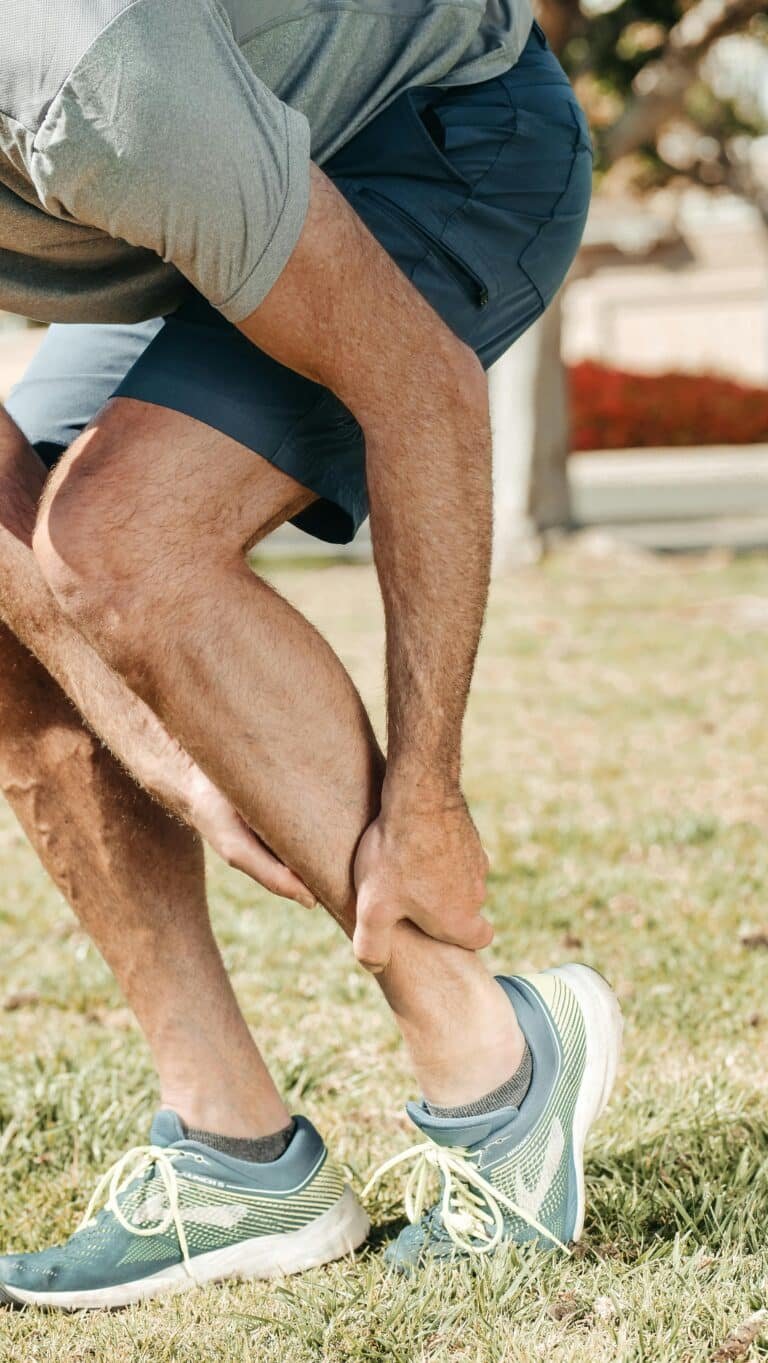
It starts as a stiff, niggly heel when you climb out of bed in the morning — and before long, every run feels like it’s being sabotaged by the back of your ankle. If that sounds familiar, you’re in good company: Achilles tendinopathy is one of the most common overuse injuries we treat at Peak Performance Institute.
The good news is that it very rarely needs surgery. With the right achilles tendinopathy treatment in West Leederville, most people are back running within a few months. In this post we’ll walk through why the tendon gets cranky, how to tell which stage you’re in, and the treatments we actually use at PPI — from load management and strength work to shockwave and orthotics.
What Is Achilles Tendinopathy, Exactly?
Your Achilles tendon is the thick band of tissue that connects your calf muscles to your heel bone. It’s the strongest tendon in your body — it has to be, because it absorbs enormous force every single time you push off the ground.
Tendinopathy is what happens when that tendon gets overloaded and starts to break down faster than it can repair itself. The old name, “tendinitis,” suggested inflammation, but we now know the real problem is more about degeneration and the tendon losing its tidy, organised structure. That’s why simply popping anti-inflammatories and resting usually doesn’t fix it — the tendon needs to be loaded the right way to heal.
Why Does It Happen?
Almost always, it’s a load problem. Tendons love consistency and struggle with sudden change. The classic story we hear at our West Leederville clinic goes something like this: someone signs up for a half marathon, doubles their weekly kilometres in a month, adds a few hill sessions, and — bam — the heel starts talking.
It’s rarely one run that does the damage. It’s the slow accumulation of:
- Sudden increases in running load — more kilometres, more hills, more speed work, all at once.
- Changes in footwear — especially switching to flatter or more minimal shoes too quickly.
- Weak or tight calves — the muscles can’t do their job, so the tendon cops the extra work.
- Poor recovery — not enough rest between hard sessions.
The Stages: Reactive, Dysrepair and Degenerative
Achilles tendinopathy isn’t one single condition — it exists on a spectrum. We generally describe it in three stages.
Reactive (the early stage)
The tendon thickens in response to a sudden spike in load. It’s painful and stiff, but the good news is this stage is very responsive to treatment if you catch it early.
Tendon dysrepair (the middle stage)
If the overload keeps happening, the tendon starts to break down structurally. Pain becomes more persistent and harder to shift.
Degenerative (the chronic stage)
The tendon now has areas of true degeneration and can look thickened and lumpy. It can still improve significantly with the right care, but it takes longer and needs patience.
Evidence-Based Achilles Tendinopathy Treatment in West Leederville
This is the part people actually want to hear about. Here’s how we treat it at Peak Performance Institute — and why each step works.
1. Load management
First, we take the heat out of the tendon. That doesn’t mean total rest — complete rest can actually weaken the tendon further. It means dialling back to a level the tendon can tolerate, then building back up gradually.
2. Progressive strength work
The cornerstone of treatment is loading the tendon. Eccentric heel drops and heavy slow resistance training are the most studied approaches. A 2023 systematic review and meta-analysis in BMC Sports Science, Medicine and Rehabilitation found eccentric exercise produced significant improvements in pain for mid-portion Achilles tendinopathy compared with other approaches. The catch is that the exercises need to be done consistently, several times a week, over months — not days.
3. Shockwave therapy
For stubborn tendons, radial shockwave therapy can help stimulate healing and settle pain. We always use it in combination with strengthening, never instead of it.
4. Orthotics and footwear
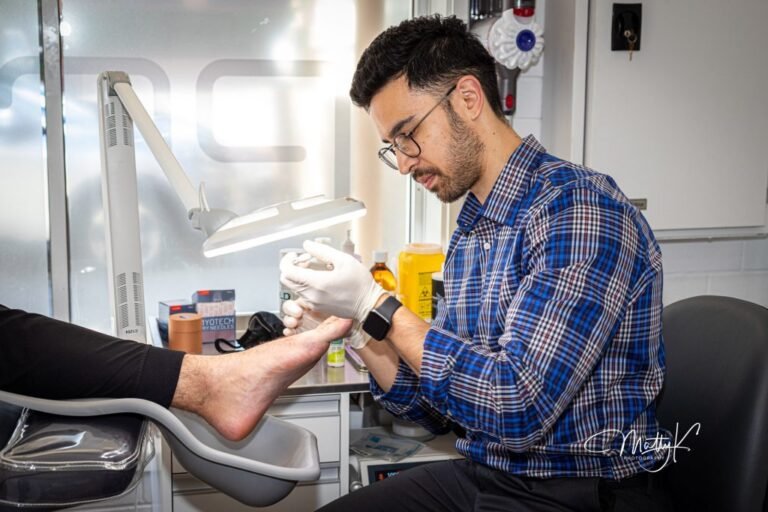
If the way you move is placing extra strain on the tendon, a small heel lift or a pair of custom orthotics can make a real difference. Our podiatrists assess your gait on camera and prescribe only what’s actually needed.
When to See a Podiatrist in West Leederville
You don’t need to live with it for months before getting help. Come and see us if:
- Your heel pain is stopping you from running or training.
- It’s stiff and sore every morning and hasn’t settled after a couple of weeks.
- You’ve tried rest, but the pain comes straight back the moment you start again.
- You feel a sudden “pop” or sharp snap — that needs urgent assessment for a possible rupture.
At Peak Performance Institute, our podiatrists work alongside physiotherapists, exercise physiologists and remedial massage therapists under one roof in West Leederville, so your whole rehab plan is covered. If your tendon trouble has roots in hip or lower back function, our chiropractors can step in too.
Ready to Get Your Heel Right?
Achilles tendinopathy is frustrating, but it’s also one of the most treatable injuries we see — when it’s handled properly. If the back of your ankle has been holding you back, call Peak Performance Institute on (08) 9381 1265, or pop in and see us at 144 Cambridge Street, West Leederville. Let’s get you back to doing what you love.
References
- Cleveland Clinic — Achilles Tendinitis: Symptoms & Treatment
- Mayo Clinic — Achilles tendinitis: Symptoms & causes
- BMC Sports Science, Medicine and Rehabilitation (2023) — Eccentric exercise is more effective than other exercises in the treatment of mid-portion Achilles tendinopathy: systematic review and meta-analysis